
The Science Behind Gaia
The water that reaches your shower has been disinfected with chlorine, has picked up minerals from the rock it passed through, and has flowed through pipework that adds heavy metals. All of it adds up, every shower, every day - on the largest organ you have.
THE FOUR THINGS YOU CAN'T SEE
What's actually coming out of your shower
Chlorine
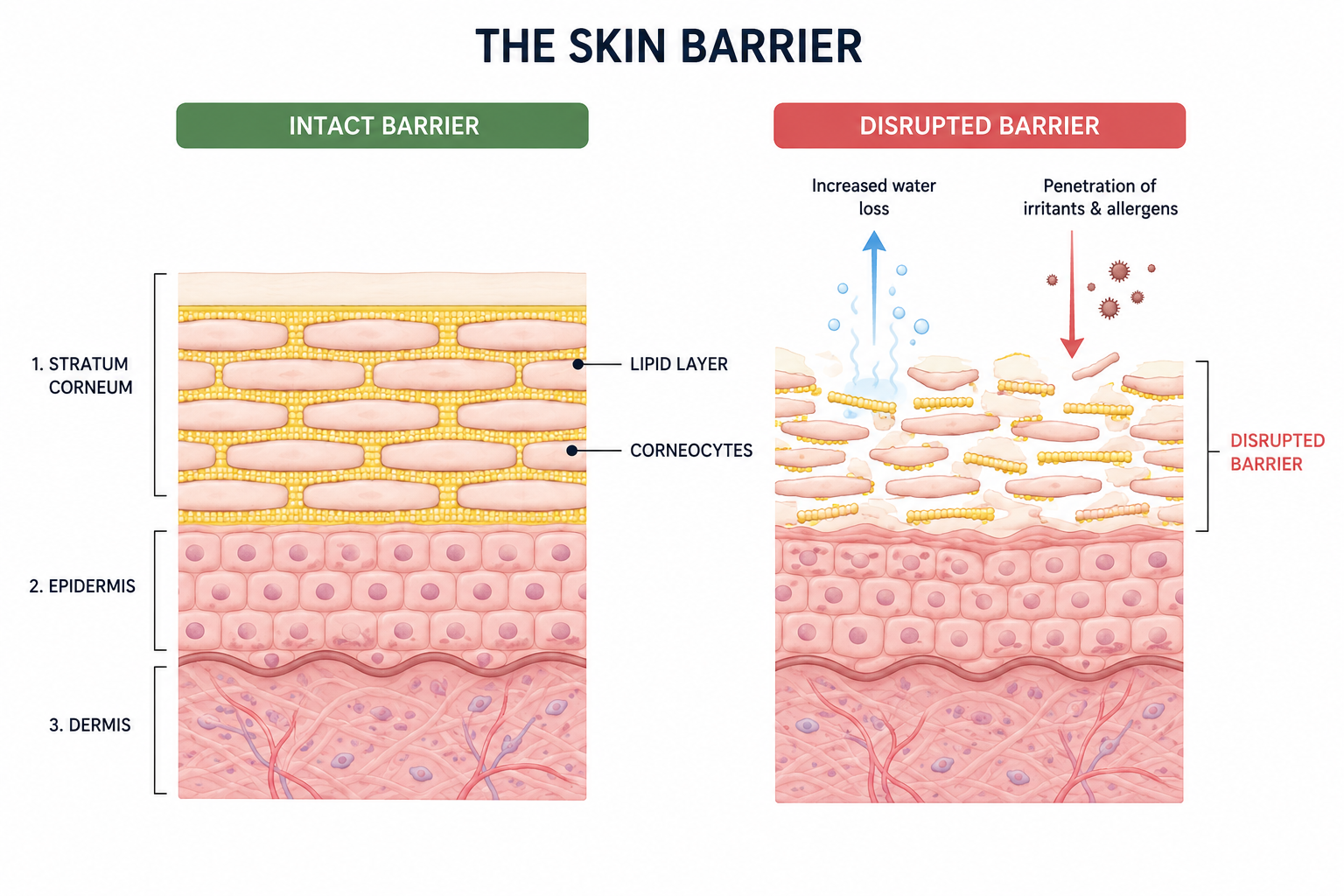
Added at the treatment plant to kill bacteria. The problem is that chlorine doesn't switch off when it reaches you. In a hot shower it volatilises into steam (so you inhale it), and on skin it reacts with the natural lipids that keep your barrier intact, stripping them away
Hard water minerals
Calcium and magnesium picked up from limestone bedrock. They're what cause the white residue on your shower screen and the limescale in your kettle. On skin they leave a fine film that disrupts moisture balance; on hair they bind to the cuticle and build up over time.
Heavy metals
Lead from older lead-jointed mains, copper from internal plumbing, iron from corroded sections. Very problematic for sensitive skin as well as colour treated hair.
Sediment and particulates
Tiny fragments of rust, sand and rubber from pipe seals — too small to see, large enough to abrade skin and dull hair over time.

THE REAL PROBLEM
If your shower water is stripping your skin barrier every morning, the most expensive moisturiser you apply afterwards is trying to repair damage that's about to happen again tomorrow. The same is true for your hair - bond-builders rebuild what hard water broke this morning, but tomorrow's wash starts the cycle again. The only way out of the cycle is to change what's in the water, not what you put on after it.
What it does to your skin
- Strips the natural lipid barrier — chlorine reacts with the sebum and ceramides that keep skin supple.
- Disrupts pH — alkaline hard-water minerals push skin away from its healthy ~5.5 pH.
- Triggers and worsens eczema, dermatitis and rosacea in people predisposed to them.
- Leaves a fine mineral film that dries and dulls skin over time.
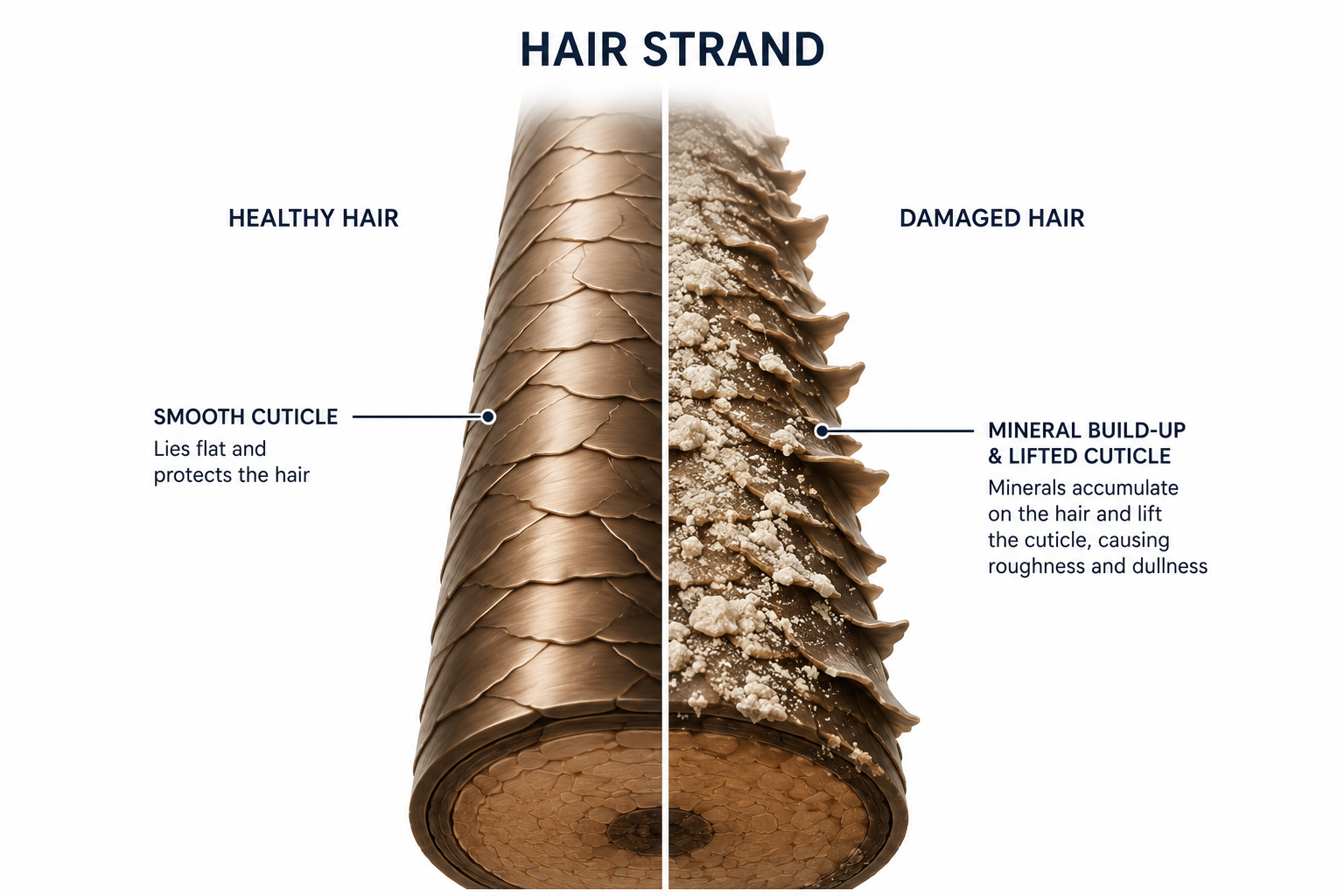
What it does to your hair
- Mineral build-up coats the hair shaft and weighs it down.
- Strips colour-treated hair faster — brassy tones, faded colour, dull finish.
- Increases breakage and shedding by drying the cuticle.
- Reduces shampoo lather, so you use more product to get the same result.

THE MECHANISM
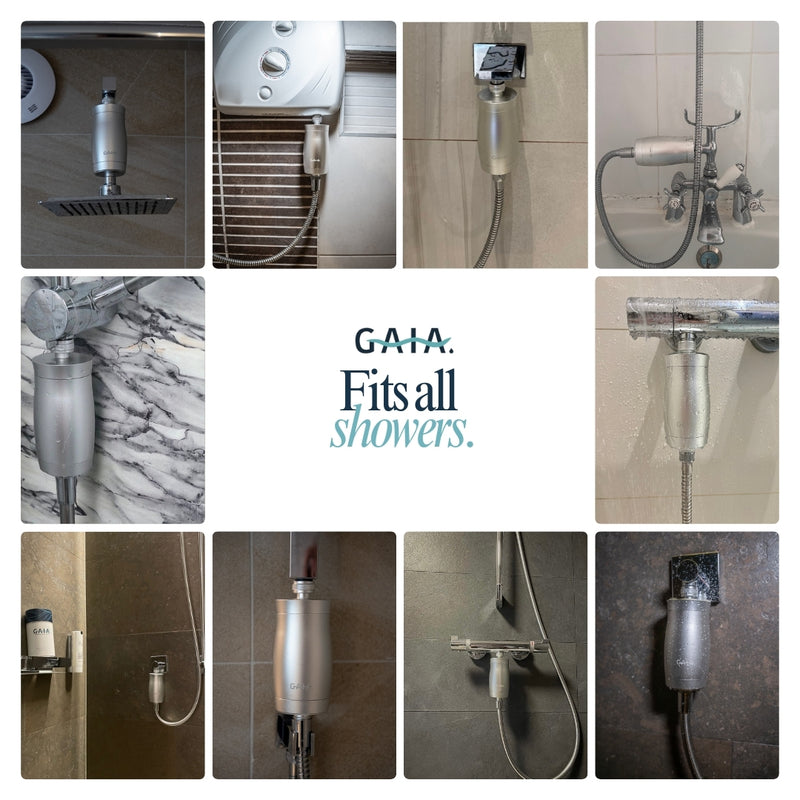
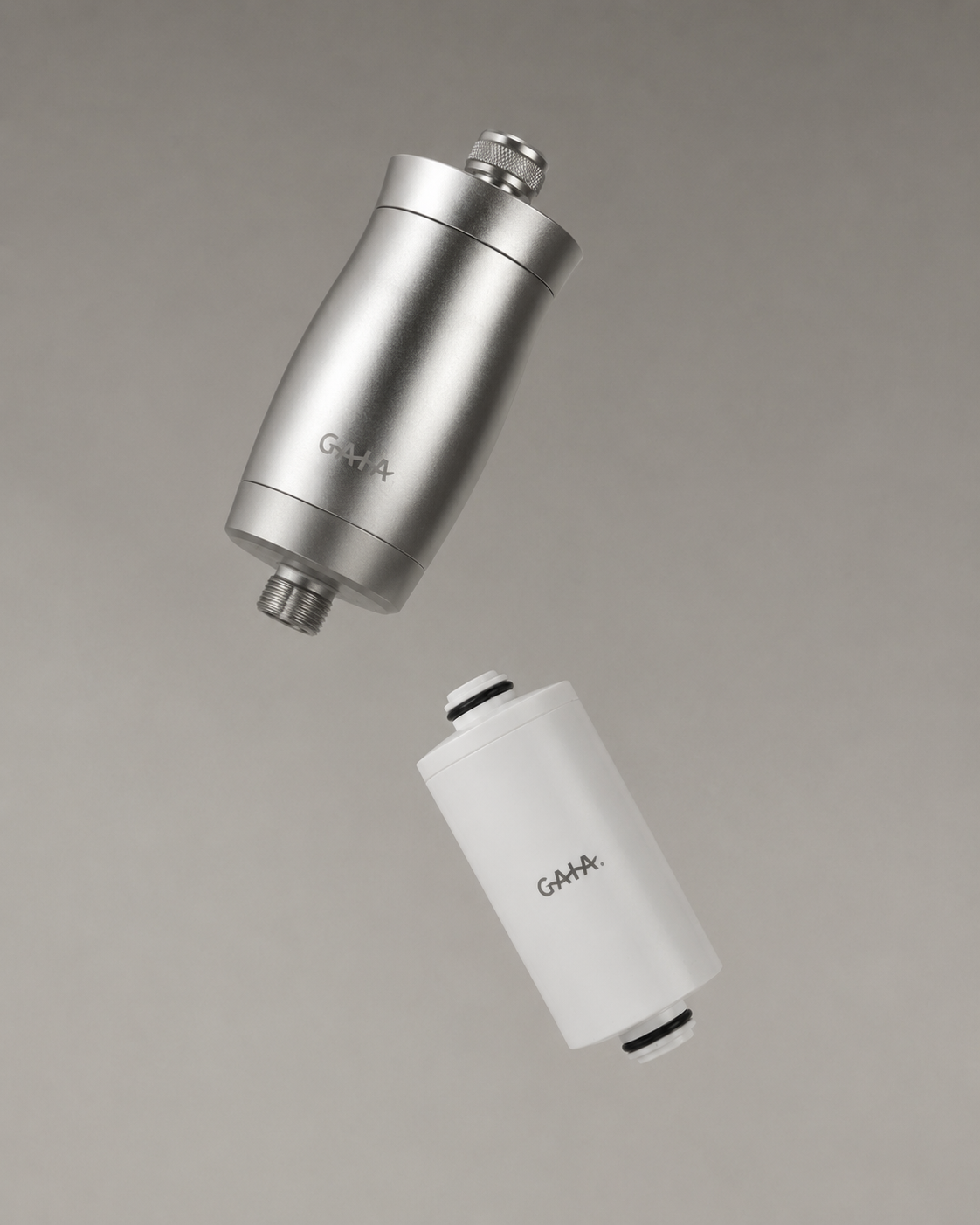
The Gaia casing fits between your shower tap and shower hose. Can also be attached onto rain shower heads. Water flows in at the top, passes through 5 stages of filtration media, and exits at the bottom - already cleaner before it touches your skin. There's nothing electrical and you don't lose water pressure.

Who started Gaia Filters
April Church — Environmental Scientist & Founder
I studied Environmental Science at University College Cork, but Gaia Filters really began with my own struggles with my hair and skin. The more I researched water quality, the more I started questioning the water I was showering in every day, especially the impact of chlorine, hard water and other impurities on skin and hair.
After trying filter after filter and never finding one that truly felt right, I decided to create my own. Everything on this page is based on the research, ingredients and thinking that shaped Gaia Filters from the very beginning.
Read my full storyThe Gaia Shower Filter - multi-stage filtration. 30-day money-back guarantee.
Cleaner water in 60 seconds.
Shop the Gaia FilterStill not sure? Email us here.
Shop now